Yes... you can...under one condition... you help the POOR!
In both AVODAH and After Seatle the message of helping others was stressed. "AVODAH: The Jewish Service Corps" looks for social change. AVODAH looks to change the lives of people suffering poverty. This change is accomplished through improvement of the people's neighborhoods and providing opportunities. (Lynch,Wysocki 117) After Seatle spoke about outreaching to the less fortunate through such as Global free trade. Global free trade promotes economic growth and in the long run, provides the poor foreign countries with conditions in which democracy and respect of rights can be attained. (Lynch,Wysocki 122)
I do believe that AVODAH website considers their work "advocacy" because throughout the whole website it stressed justice, and doing what's right as if no one nowadays was...The Alumni profiles they chose also showed how AVODAH's motto is "advocate." One particular Alumni, Abby Miller summed up how well AVODAH has influenced her, "'AVODAH faciliated the collaboration of faith, working for JUSTICE, trying to understand poverty, looking for community...all of these things I had been trying to figure out on my own. My year in AVODAH put it all in one place'" (Lynch,Wysocki 119). Alumni's can either make great or bad advertisement...and AVODAH chose well...
Finnegan's After Seatle, is text that internationally would be appreciated for its recognition of such orgs as WTO, but sympathically speaking, readers who are passionate in helping the less fortunate would be more intrigued to read this.
Both articles made me take a step back from my comfortable life, and think...MAYBE I CAN HELP TOO =)
Monday, February 23, 2009

Thursday, February 19, 2009
Animals do the darndest things!! XD
Pick a boo I got you.
That is what one curious sea otter did at Montery Bay, surprising the heck out of one photographer named Enrique Aguirre. The San Jose Mercury News tells us the story.
Aguirre is a photographer that goes once a month to the bay and takes pictures of such sea life as seals and sea otters. On this particular visit the photographer got more than he expected, a sea otter with a video camera in its paws aimed at him. Aguirre told SJMN about his intial reaction to what he saw the otto doing, "I was like, did I actually see an otter with a video camera or was I hallucinating?" Hallucinating, is right, I can just imagine how surprised I'd be to see such a creature with the equipment, and how well it was managing it. The video camera is speculated to have been from a kyaking tourist. With the accumulated rust, the camera is thought to have been dropped in the water for some time. Since that one encounter with the otter, Aguirre has come back to the spot where he saw the unforgetable sight, but no sight of the video camera otter. Aguirre concludes his thoughts about seeing the otter with these humerous words, "I know I can go down there another million times and I will never see another otter with a video camera, I think I have more chance of a penguin coming up to me and actually speaking English." Wouldn't that be a sight to see?!?!
That is what one curious sea otter did at Montery Bay, surprising the heck out of one photographer named Enrique Aguirre. The San Jose Mercury News tells us the story.
Aguirre is a photographer that goes once a month to the bay and takes pictures of such sea life as seals and sea otters. On this particular visit the photographer got more than he expected, a sea otter with a video camera in its paws aimed at him. Aguirre told SJMN about his intial reaction to what he saw the otto doing, "I was like, did I actually see an otter with a video camera or was I hallucinating?" Hallucinating, is right, I can just imagine how surprised I'd be to see such a creature with the equipment, and how well it was managing it. The video camera is speculated to have been from a kyaking tourist. With the accumulated rust, the camera is thought to have been dropped in the water for some time. Since that one encounter with the otter, Aguirre has come back to the spot where he saw the unforgetable sight, but no sight of the video camera otter. Aguirre concludes his thoughts about seeing the otter with these humerous words, "I know I can go down there another million times and I will never see another otter with a video camera, I think I have more chance of a penguin coming up to me and actually speaking English." Wouldn't that be a sight to see?!?!
Monday, February 16, 2009
crediblity DEPENDS on WHO'S "reading"
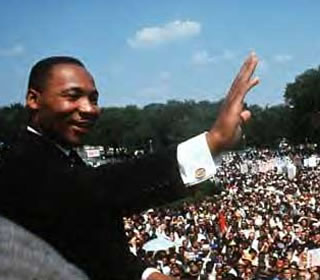
Audiences, time, location, religion, practices, etc. add to credibility of the writer. Ethos as Chapter 13 refreshes our minds about is what the writer does to persuade the reader to be interested in what they are reading. I enjoyed reading the first editorial also known as a broadside from the 1799.Looking at that text "To the Public" by Thomas Cooper and later comparing it to the electronic text, and written texts of my time, I felt Cooper got more out of writing. Reading what happened to Cooper for voices his opinions against the president John Adams took courage, took a strong great writer to do. Of course he knew the time was bad to saw what he said about the government, but he did it anyway. Writers who take a chance, risk their jobs, lives are the writers we readers nowadays are attracted to. Cooper being sent to jail would make anyone quit their job, and rethink another path, but I'm sure he didn't. His written work and courage reminded me of Martin Luther King Jr. MLKJ risked not only his life, but that of his family, but he knew if he didn't voice what he had to say no change would happen in the black community or at least some change within the black community. For his words, for his memorable speech at the Lincoln Memorial, he was soon followed, had his house bombed and was asinated. Right now freedom of speech, ideas, etc is more voice able, and people are more tolerant. People nowadays see what others have to say as their opinion, and know that if they'd like to have their own opinion they can.
Sunday, February 15, 2009
Aren't big classes horrible!?!?
The article I chose from the SJMN (San Jose Mercury News) was about student teacher ratios as a result of the budget cuts. The title of this article is “Teachers launch effort to save small classes.” This topic about teachers and student class sizes interests me because I plan to become a teacher within the next four years. I’d like to teach if possible in California. As a student in California, I know and am aware of the budget cuts. Public schools really don’t have much money and teachers are paid pennies, figuratively speaking. The article spoke about how the budget cuts have forced schools to make big decisions about either having more than twenty students per classroom or smaller classes with new teachers who have little experience or lack credentials. Education is so valuable and that is one of the main reasons I want to be a teacher. I want to teach my students vital information they can use in the future. Without teachers there wouldn’t be the professionals there currently are. Each grade level counts, and having bigger classes will only affect the students learning as one San Jose mother commented on the issue, “I only have two kids, and on a lot of days I’m tearing my hair out. Just going to the grocery store is a nightmare. I can’t even fathom 20 students, much less 30.” Each child requires different amount of attention and time. I can just imagine when I start teaching how outrageous class sizes will be. Big classes are distracting for students, I can speak for myself. Beck Parker, a teacher also said a few reflective words on the situation, “The best thing California did was go to 20 to 1. To take it away is like going back in time.” Ms. Parker has worked as a kindergarten teacher in San Jose for seventeen years, so she has seen the ups and downs of schools. I strongly believe we should invest more money in our schools and find a way to maintain class sizes 20 to 1.
Wednesday, February 11, 2009
Wow these people have time
The blogging article which I enjoyed reading the most was the “How I Became an Academic Who Blogs” by Billy Clark the Senior Lecturer from Middlesex University, London. I liked this article because Mr. Clark added the detail that he is a linguist. Being a language lover myself, I was intrigued to see what he had to say about blogs. Later Clark wrote about a blog that he himself became a member of called linguabloggers. I soon found myself clicking on that particular blog link. Once I clicked the link sadly it doesn’t exist anymore. I thought it was nice how he mentioned at the end he ended his blog a few encouraging words of why readers should write a blog, “One of the pleasures of blogging is that you never know how things will develop. Maybe the blog will take off as an educational tool for my students. Maybe even others will benefit from it. Or maybe the interest will be low. It'll be fun finding out.” I really liked the way he made it clear how fun blogging can be, and how blogging can be educational, but also beneficial to know how to use for i.e. as a journal, etc.
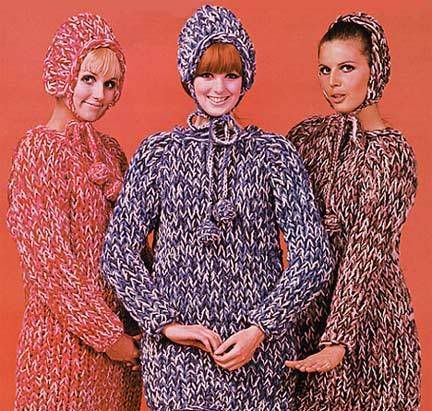
Another blog article I found interesting and odd at the same time is titled “Knit Blogging: Considering an Online Community” by Amy E. Earhart a lecturer and coordinator of Instructional Technology at Texas A&M University. It was interesting to read because all the blogs on the Lore website focused mainly on talking about blogs, how they write in them, and how they make their students write in their own blogs. This blog on the other hand focused on Earhart’s love in knitting and how she was able to find a community of knitters within the knitting blog she joined. She spoke directly how she benefited from the blog in that she was able to learn different knitting styles, and how she herself could become a better knitter. The article was odd in that I didn’t know how important blogs can be for so many people on a daily basis.
Another blog article I found interesting and odd at the same time is titled “Knit Blogging: Considering an Online Community” by Amy E. Earhart a lecturer and coordinator of Instructional Technology at Texas A&M University. It was interesting to read because all the blogs on the Lore website focused mainly on talking about blogs, how they write in them, and how they make their students write in their own blogs. This blog on the other hand focused on Earhart’s love in knitting and how she was able to find a community of knitters within the knitting blog she joined. She spoke directly how she benefited from the blog in that she was able to learn different knitting styles, and how she herself could become a better knitter. The article was odd in that I didn’t know how important blogs can be for so many people on a daily basis.
Subscribe to:
Posts (Atom)